Salman Agha, Mehidy Hasan Miraz Rise in ODI Rankings After Win Over Pakistan
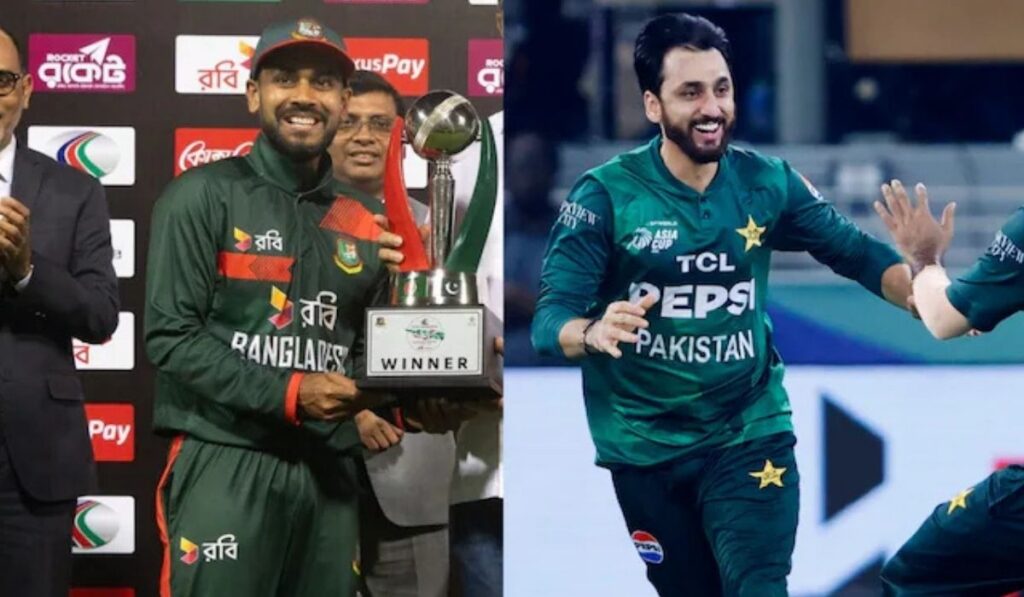
Bangladesh’s ODI stars surged up the rankings following their 2-1 series win over Pakistan, with standout performances from both batters and bowlers. Salman Agha broke into the top 10 of the ODI batting rankings, reaching No.9 after finishing as the joint-highest run-scorer of the series alongside Tanzid Hasan Tamim. Salman scored 175 runs in three matches at an average of 58.33 and a strike rate of 104.17. He also hit a century in the series decider, making 106 off 98 balls, including nine fours and four sixes, though Pakistan fell short by 11 runs chasing 291 at the Sher-e-Bangla Stadium. Mehidy Hasan Miraz made a significant leap in the bowling rankings, moving up nine spots to No.7 after taking five wickets at a strike rate of just 3.33. His best figures came in the first ODI, where he claimed 3/27 in 10 overs. Tanzid Hasan Tamim also climbed rapidly, jumping 31 places to No.55 in the batting rankings. The southpaw amassed 175 runs at an average of 112.18, registering his maiden ODI century in the final match with 107 off 108 balls, including six fours and seven sixes. On the bowling front, Taskin Ahmed rose 12 places to No.28 after picking up six wickets in the three-match series at an economy rate of 5.48. Nahid Rana also made a remarkable jump, entering the top 100 in ODI bowling after climbing 65 places, highlighted by his five-wicket haul in the opening game that rattled Pakistan’s batting lineup. The series not only showcased Bangladesh’s depth in both batting and bowling but also reflected the team’s growing consistency on the international stage, with multiple players now making their mark in the global rankings.
Abhishek Sharma Opens Up on T20 World Cup Struggles and Lessons Learned
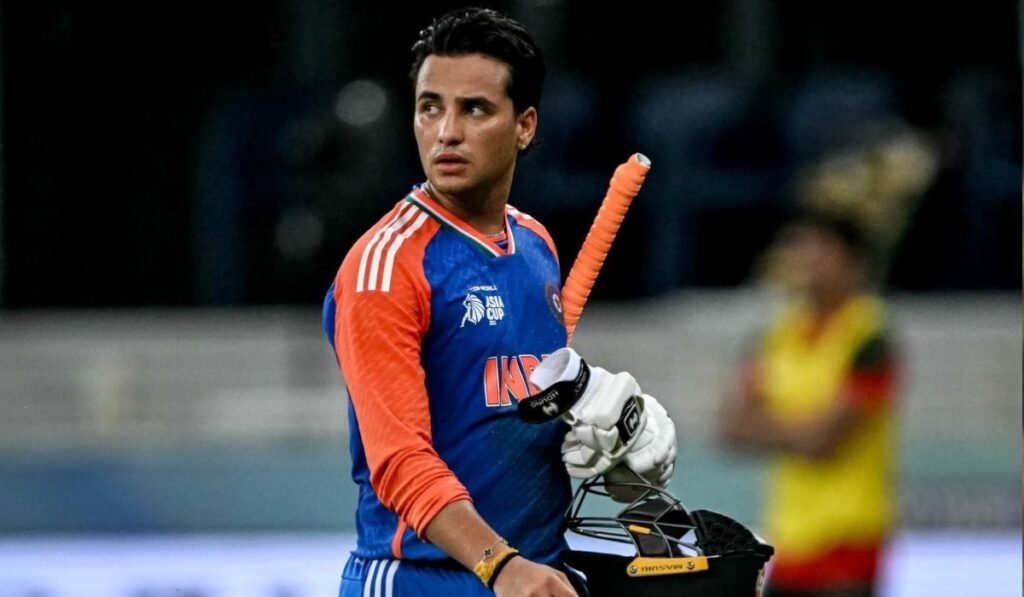
Abhishek Sharma said his difficult run at the 2026 T20 World Cup became a turning point in his career. He added that the experience taught him the importance of mental strength and trusting his game even during failures. The Indian opener, who came into the competition as the No.1 T20I batter, struggled badly after falling ill early in the campaign. He missed a group-stage match and then returned to score three consecutive ducks, a phase he admitted was extremely challenging. “Playing a World Cup teaches you quickly how important mental strength and process are,” Abhishek said. “The biggest learning for me was staying balanced, not getting too high after a good innings and not too low after failures.” He credited captain Suryakumar Yadav and head coach Gautam Gambhir for standing by him during the slump. Their support, he said, helped him stay confident and stick to his natural style. “Surya bhai was amazing throughout. Even after the ducks, his message was very clear: ‘Play your natural game and don’t worry about the result.’ That kind of backing from your captain makes a huge difference,” he said. Abhishek also remained in close contact with his mentor, Yuvraj Singh, who encouraged him not to change his approach despite the failures. “I spoke to Yuvi paaji regularly. His message was simple: ‘Don’t change who you are as a player.’ He told me aggressive players will have phases like this, but if you keep backing your strengths, runs will come,” he added. Reflecting on the experience, Abhishek said it has helped him grow stronger mentally and as a cricketer. “Experiences like this make you stronger as a player. Hopefully, it will make me more resilient and mature in how I approach the game,” he said. He will next be seen in IPL 2026 with Sunrisers Hyderabad, who begin their campaign against Royal Challengers Bengaluru, and could even take on a leadership role if Pat Cummins is unavailable.
African Football Confederation hands AFCON title to Morocco as Senegal launch appeal after final controversy
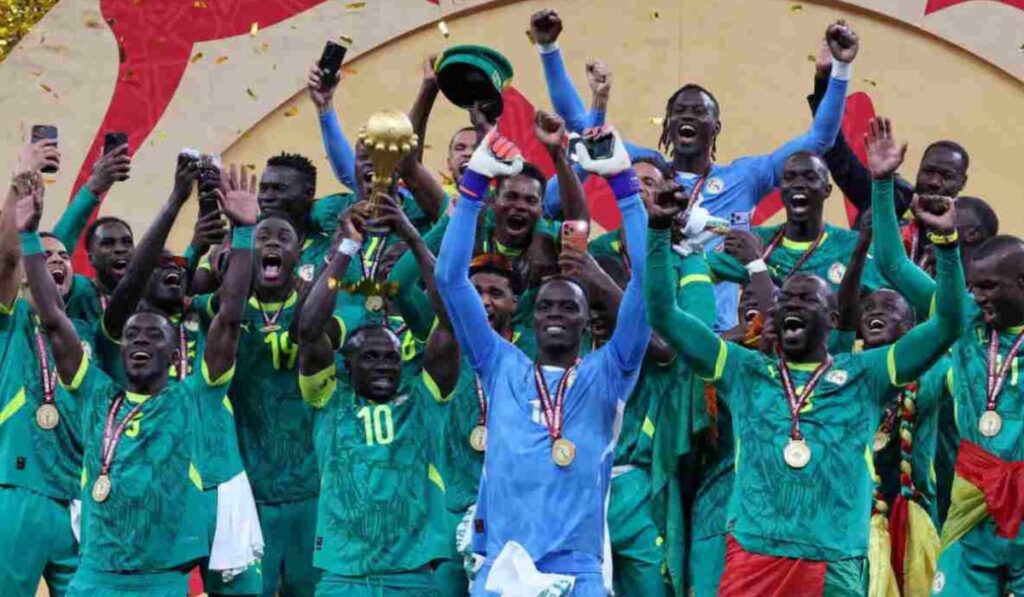
Senegal says they will appeal after the Confederation of African Football stripped them of their Africa Cup of Nations title and awarded it to Morocco following their chaotic final in Rabat. The match had originally ended in a 1–0 win for Senegal after extra time, with Pape Gueye scoring the decisive goal. But the game was overshadowed by controversy when Senegal’s players walked off the pitch late in stoppage time to protest a penalty awarded to Morocco. Captain Sadio Mané eventually brought the team back, and Morocco missed the spot-kick. After reviewing Morocco’s appeal, CAF ruled that Senegal had broken the rules by leaving the field. The body stated that the team is “declared to have forfeited the match” and that the result is “officially recorded as 3-0” in Morocco’s favour. CAF said its decision was based on regulations which state that if a team “refuses to play or leaves the ground before the regular end of the match without the authorisation of the referee, it shall be considered (loser)”. The rules also say such a team “will lose its match by 3-0”. Morocco’s federation insisted its move was procedural, saying the appeal “was never intended to contest the sporting performance” but to ensure the rules were applied. It added that it remains committed “to respecting the rules, to the clarity of the competitive framework, and to the stability of African competitions”. The Senegalese Football Federation reacted strongly, calling the ruling “unjust, unprecedented and unacceptable” and warning that it “brings African football into disrepute”. They confirmed they will take the case to the Court of Arbitration for Sport “as soon as possible”. The final itself was marked by disorder, including a near 20-minute delay and attempted pitch invasion by fans. The controversial penalty, awarded after a VAR check for a foul on Brahim Díaz, was taken late in added time but saved by Édouard Mendy. After the ruling, some Senegal players reacted angrily online. Earlier, FIFA president Gianni Infantino had also criticised the incident, saying: “It is unacceptable to leave the field of play in this manner, and equally, violence cannot be tolerated in our sport.”