
‘We haven’t Played Good Cricket’; Mahela Jayawardene on Hardik after MI’s 103-run Loss
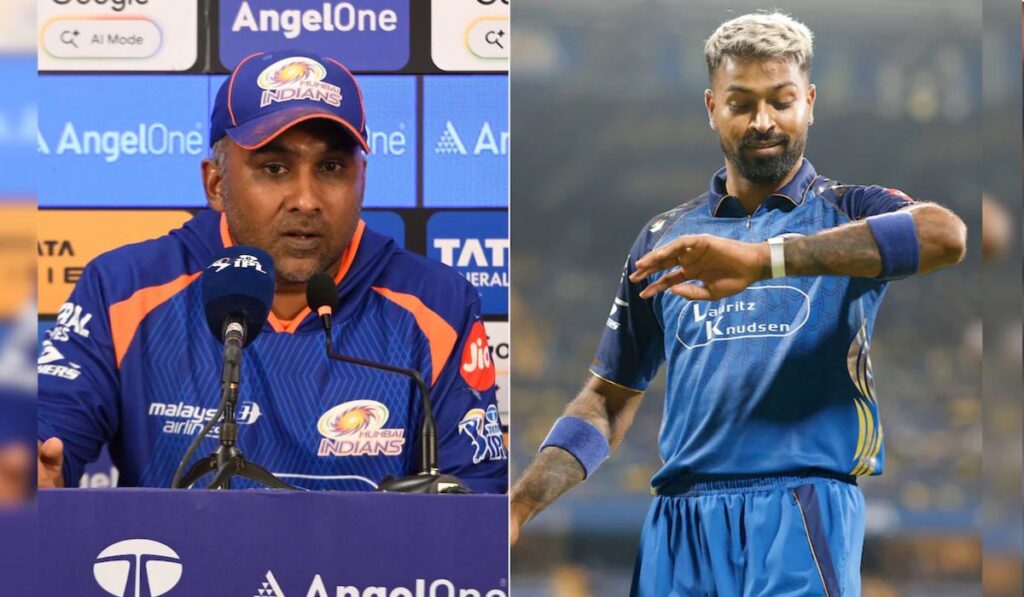
Five-time champions Mumbai Indians were left searching for answers after a crushing 103-run defeat to Chennai Super Kings, and head coach Mahela Jayawardene admitted the team has not been good enough this season. “I think the reality is that with four points after seven games, honestly, we haven’t played good cricket. It’s been in patches,” Jayawardene said after the match. “We had a great game in Ahmedabad where I thought we found some rhythm, but again, we lost it.” The coach conceded the game was effectively lost in the early stages, with MI failing in both power plays. “Once you lose a match like that, it’s difficult to even analyse it. We lost both powerplays, with the ball and with the bat, and we just couldn’t get into the game,” he said. “We’ve got a little break now… we know exactly what is required, and we’ll plan and put our best foot forward.” Jayawardene pointed out that bowling inconsistency has been a major issue, particularly the number of expensive overs conceded. “If you analyse the seven games, yes, there was a hole in our bowling. It’s just execution and consistency,” he said. “We are one of the teams that has conceded the highest number of big overs, 18-plus runs. When you give away 20-plus runs in an over, it puts us in a very bad position to even claw back into a game.” Despite questions around captain Hardik Pandya’s form, Jayawardene avoided blaming individuals and stressed the need for a collective turnaround. “To be honest, I don’t think it’s a concern. He started well; in the first few games, he bowled really well,” he said. “As a unit, we’ve struggled. It’s not just individuals, and I don’t want to name names.” “As a team, we haven’t been consistent. Usually, we are very good as a unit, but we haven’t picked up early wickets,” he added. “If you look at the batting as well, we have been good, but there have been patches where we haven’t been consistent. It’s not one individual; as a team, we all have to improve.” Mumbai Indians now head into a short break before their next Indian Premier League fixture, needing a strong response to revive their campaign.
Mumbai Indians under Fire Over Santner Concussion Substitute Decision
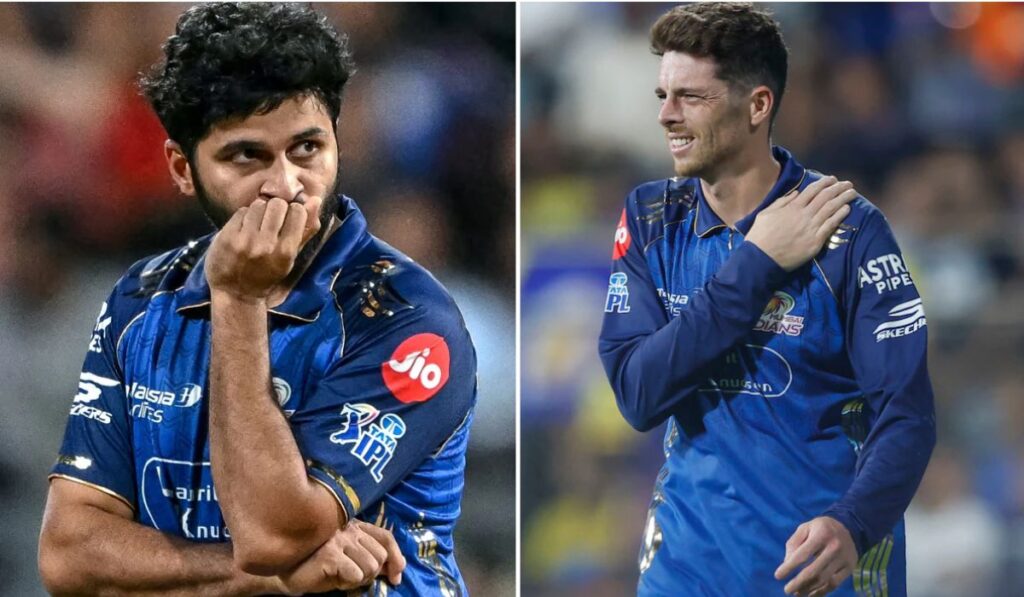
Mumbai Indians found themselves in the middle of a major controversy during IPL 2026 after a concussion substitute decision involving Mitchell Santner sparked widespread debate. The incident occurred during their clash with the Chennai Super Kings when Santner injured himself while taking a catch. The New Zealand all-rounder was seen clutching his shoulder and had to leave the field. Soon after, the Mumbai Indians brought in Shardul Thakur as a concussion substitute—a move that raised eyebrows. Questions quickly followed. Under IPL rules, concussion substitutes are only permitted for head or neck injuries and must be backed by a proper medical assessment. In Santner’s case, the injury initially appeared to be related to his shoulder, with visuals later showing him icing it in the dugout. This led to doubts over whether the rule had been applied correctly, as well as whether Shardul qualified as a like-for-like replacement. Mumbai Indians head coach Mahela Jayawardene addressed the issue after the match, insisting the decision was medically justified. “He hit his head first and neck. Obviously, the shoulder as well,” Jayawardene said. “He went for a scan. Once he got back, he felt dizzy. So, he was lying down. Yes, the ice was there for the shoulder, but he felt he wasn’t stable. So, we took him for a scan.” He added that the final call rested with match officials. “We requested (for a concussion substitute). Obviously, it is the match referee and the umpires’ discretion. They allowed Shardul,” he said. “Mitch will be disappointed that his batting prowess was matched to Shardul, but it is what it is. Hopefully, it’s not too bad.” Despite the substitution, the Mumbai Indians failed to recover in the game, eventually suffering a heavy 103-run defeat.
Clubs left without revenue clarity in Genius Sports’ ISL proposal
Genius Sports presented its long-term vision for the Indian Super League (ISL) in a meeting with clubs on Thursday, emphasising its technological expertise and global experience but stopping short of offering concrete financial assurances. The London-based data and analytics firm, which has proposed a 20-year agreement structured as 15 years plus a five-year extension, was invited to the discussion by the All India Football Federation (AIFF) following requests from ISL clubs. During the meeting, Genius showcased its work across officiating, analytics, and fan engagement, highlighting partnerships with top global competitions such as the English Premier League. However, the absence of detailed financial projections or guaranteed returns left several club representatives unconvinced. “No financials were discussed. They didn’t have any financial modelling done,” a club official told News9 Sports.“While Genius showed their body of work and technology, we got very little insight into how they plan to approach Indian football and its commercial landscape in particular.” Under its proposal, Genius Sports plans to invest approximately ₹64 crore in the first year, with a 5% annual increase over two decades, amounting to a total commitment of around ₹2,129 crore. The AIFF, which owns a 10% stake in the league, would receive a guaranteed 20% of that annual investment, roughly ₹12.8 crore, while the remaining funds would be allocated toward operational and production expenses. Clubs, which collectively hold a 60% stake in the league, were hoping for clarity on their share of revenues or profits, but no such guarantees were outlined. The remaining 30% stake would be held by Genius Sports if the proposal is approved. In its official statement, the AIFF underlined the focus on technological advancement as a key pillar of the proposal.“A central theme of the meeting was the role of technology in strengthening the league’s infrastructure,” the federation said.“This included enhancements to commercial strategy, digital platforms, and match operations, alongside scalable, AI-driven officiating tools designed to improve consistency and transparency, implemented in a phased and sustainable manner. The proposed framework also includes a revenue-sharing model designed to ensure that future growth supports clubs and is reinvested across the wider football ecosystem.” Genius Sports also expressed confidence in its ability to unlock the league’s commercial potential through improved monetisation strategies, particularly in broadcast rights. According to attendees, the company expects to begin turning a profit from the second year onward. “Genius assured clubs that they are not here to make losses and hopes to make money from the second year, confident of their know-how and global expertise on monetisation of football properties,” said a person present at the meeting. Clubs, while cautious, indicated openness to further dialogue. “The clubs suggested we engage with them, and they welcomed that thought with open arms. So we await that interaction before taking any further steps,” the club official added. Discussions between Genius Sports and ISL stakeholders are expected to continue as clubs seek greater clarity before making any decisions on the proposal.