
Greg Chappell’s Tips to Shubman Gill on improvement of captaincy
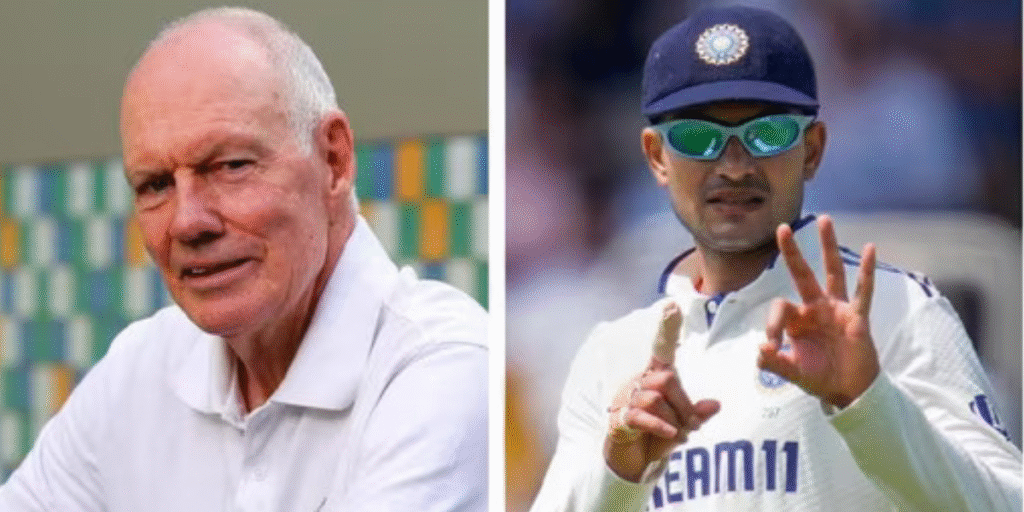
Former India head coach Greg Chappell also said that Shubman Gill will have to accept that his bat won’t always do the talking and the 25-year-old will have his “biggest examination” as captain in the Manchester Test next week. Greg Chappell noted Jadeja’s solid performance but stressed he should have batted aggressively. He called on Shubman Gill to improve communication. Gill should have directly told Jadeja to go for the win while the tail hangs around “The truth is, Jadeja was the only recognised batter left. If India were to chase down the target, he had to take calculated risks. His job wasn’t to leave balls and collect singles – it was to win the match. That clarity should have come from the dressing room, from the captain. He needed to be told directly: “You are the man who has to get this done. The tail’s job is to hang in there with you, but you must go for the win. “We saw exactly that from England’s Ben Stokes against Australia in Leeds in 2019. In a similar situation, he backed himself and produced one of the best innings of the past 50 years. “And this is where Gill’s leadership challenge becomes very real. He must start setting those expectations – clearly, proactively, and consistently. Chappell said that great captains are always great communicators, and Gill must develop this skill quickly. According to Chappell, whether it’s during training, in the middle of a match, or in the dressing room, clear and calm communication is essential. “Gill must define what sort of team he wants India to be. The captain sets the tone – not just with words, but with actions, clarity of purpose, and visible standards. That means demanding discipline in the field. India cannot afford to slip back into being a poor fielding side. The best teams are superb in the field. They don’t give easy runs. They don’t drop chances,” He noted that Gill cannot rely solely on his batting to lead and must learn to speak in a manner that aligns the team, fosters belief, and builds trust. The former Australia skipper also added that while Gill’s animated on-field self, like the one during his altercation with England opener Zak Crawley on the third day of the Lord’s Test was fine viewing, it must only come on the back of confident preparation.
Greg Chapell advises BCCI to protect prodigies like Vaibhav Suryabangshi; says child psychologists must for elite youth program

Former India head coach Greg Chappell has warned the BCCI against managing 14-year-old cricket prodigy Vaibhav Suryavanshi. The young left-hander shot to fame after being selected by Rajasthan Royals in the IPL 2025 auction, and later with his thrilling century against Gujrat Titans last month. Chapell warned that while Suryavanshi bats with the authority of a man twice his age, he is “still a child – physiologically, neurologically, emotionally.” “His brain is still wiring itself, his values still forming, his identity still fragile. In that context, such acclaim, such expectation, such public adulation, can become a double-edged sword.” Chapell noted in his column for ESPNCricinfo. He added that child prodigies can be a ‘double narrative’, giving hope and a sense of wonder to fans but also being forced to carry burdens that they are not equipped to handle. To make his point, Chapell gave the example of Sachin Tendulkar and Vinod Kambli, one of them succeeded while the other failed to balance fame with discipline. “ Sachin Tendulkar succeeded as a teenager not simply due to talent but because of a solid support system – a stoic temperament, a wise coach, and a family that protected him from the circus. On the other hand, Vinod Kambli who was equally talented and more flamboyant, struggled to balance fame and discipline. His fall was as dramatic as his rise,” explained the former India coach. Prithvi Shaw is another wunderkind who has fallen but may yet find a way back to the pinnacle,” Chappell added. Chapell added that it was up to the cricket board, along with other stakeholders, to protect the young cricket prodigy. He noted, “It is incumbent on the cricketing ecosystem – the BCCI, the franchises, mentors, and the media – to protect him. Talent can’t be bubble-wrapped, but it can be provided as a buffer. It must be guided, not glorified; nurtured, not just marketed,” The former India coach suggests a few ways to protect young and emerging talent in cricket. First, he says, there should be licensed child psychologists as part of every elite youth program.