
Javier Siverio and Aakash Sangwan highlight the persistent issues in Indian football following the team’s recent loss to Bangladesh
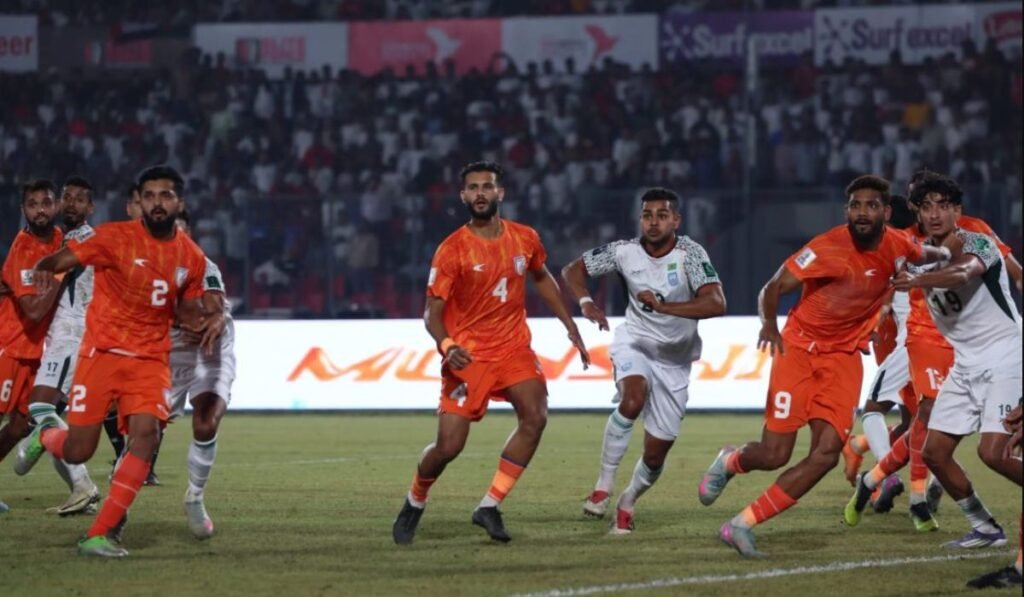
Once again, Indian football is under fire after a disastrous defeat against Bangladesh in the Asian Cup qualifier, which was only of academic interest as both teams have already crashed out of the qualification for the main round. Social media is being filled with severe criticisms from football lovers, as their focus is on the players’ lackluster performance in the match held on Tuesday in Dhaka. Many supporters expressed their wrath, pointing out individual failure, questioning effort, desire, and commitment. Frustration flooded social media. However, the players decided to address the situation honestly. Their responses were not defensive. Instead, they highlighted why Indian football continues to sink into these cycles of disappointment. Even, Spanish footballer of FC Goa, Javier Siverio, opened up on the Indian players’ miserable performance. He stated, “Players aren’t the reason the system is falling apart”. Aakash Sangwan also emphasized the depth of the structural cracks. Instead of directly defending the team, he pointed to the long list of issues that define a typical season for most professionals now. He highlighted how the top division itself hangs in uncertainty, with no clear investment, no confirmed bidders, and barely any communication from those in charge. Players, he suggested, often find themselves signing contracts only to be told days later that there is nothing to train for. He implied that casual comments about technique or effort only scratch the surface. The real damage, Sangwan hinted, lies in the broken framework surrounding the sport, a framework that leaves players guessing about their futures and battling far more than what happens over ninety minutes on the pitch.
India to train in Kolkata on Tuesday, leave for Guwahati without Shubman Gill on Wednesday
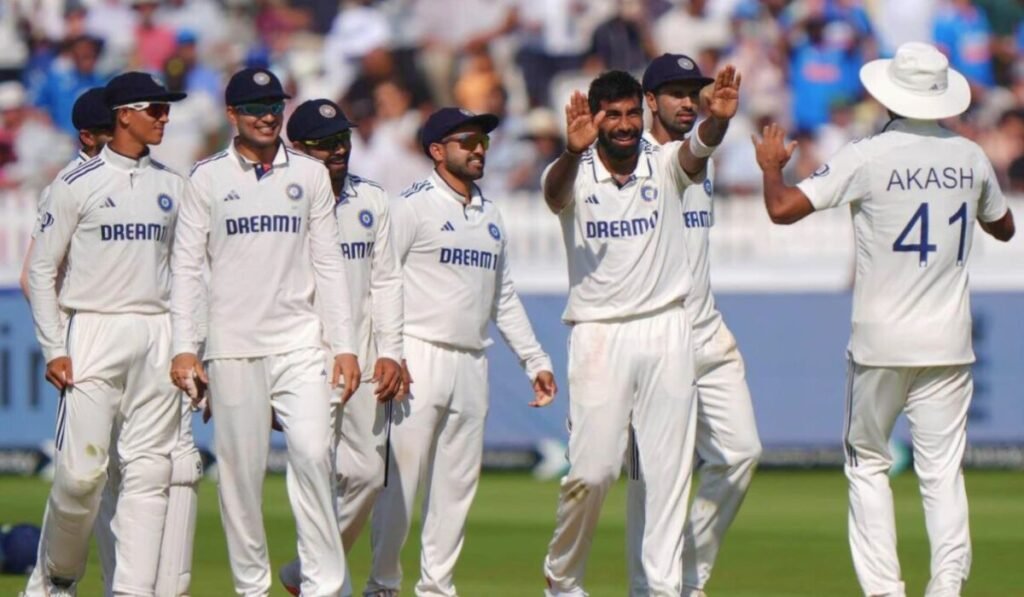
The Indian cricket team will have its first training session on Tuesday at the Eden Gardens after the defeat at the hands of South Africa in the first Test. The hosts, who were without the services of team captain Shubman Gill for 3 innings, were handed a 30-run defeat by South Africa, ending their unbeaten streak in Tests in Kolkata. The 2nd Test will be played in Guwahati from 22nd November onwards. According to ESPNCricinfo reports, Team India will have a training session at the Eden Gardens on Tuesday. Following that, the team will travel to Guwahati on Wednesday. Meanwhile, Gill – who was discharged from the hospital on Sunday evening – will neither be part of the training session nor travel with the team. The report suggests that since commercial air travel is not recommended for people with neck issues, Gill is unlikely to travel with the team on the same day. After facing just 3 deliveries in the 1st innings, Gill was forced to retire hurt following a sweep shot. The BCCI later said in a statement that he had suffered a neck spasm and was ruled out for the remainder of the 1st Test. Subsequently, the Indian captain was admitted to a hospital and was closely monitored by Dr Dinesh Pardiwala. “Captain Shubman Gill had a neck injury on the second day of the Test against South Africa in Kolkata. He was taken to the hospital for examination after the end of the day’s play. He is currently under observation in the hospital. He will take no further part in the Test match. He will continue to be monitored by the BCCI medical team,”BCCI had said in a statement on 16th November.
Harbhajan Singh slams Eden pitch, says pathetic after India’s loss to South Africa
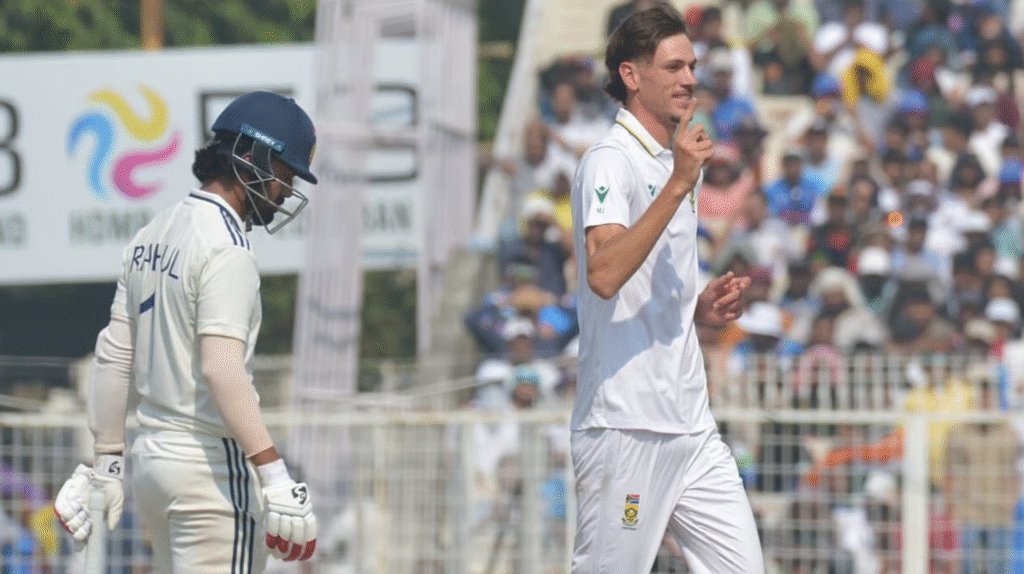
Harbhajan Singh, a former Indian spinner who famously acquired 13 wickets at the Eden Gardens in India’s iconic Test triumph against Australia in 2001, slammed the pitch after India conceded a 30-run victory at the Eden Gardens against South Africa on Sunday, with two more days left. South Africa were bundled out for 153 on the third morning, setting a target of only 123 for India. But as the pitch had already broken on several spots, India’s poor chase failed to reach the target, collapsing to 93 in their second innings. This was India’s loss after 13 years at the Eden Gardens and they also booked their place in the lowest five defeats at this venue. Harbhajan said on his YouTube channel, “This pitch is not at all fit for cricket’s longest format. The pitch has developed such a large number of spots on the surface that the spinners of both teams who bowled and scalped wickets did not even know what would happen after a ball was delivered.” “This pitch is like, you pitch here, and the ball will turn and go elsewhere. I am sure that even the top-class batsmen like Sachin Tendulkar, Virat Kohli, and Rohit Sharma would have struggled to survive on this surface. You can see the reflection where Temba Bavuma’s unbeaten 55 is the highest run scored on this pitch.” Harbhajan added, saying, “It has been going on for years in our country. The game is being played on completely under-prepared pitches. Test cricket does not seem to have any value nowadays, and this pitch at the Eden Gardens is not acceptable. It is pathetic.”
Gill says adjusting to different formats of games depends more on psychological flexibility than physical ability
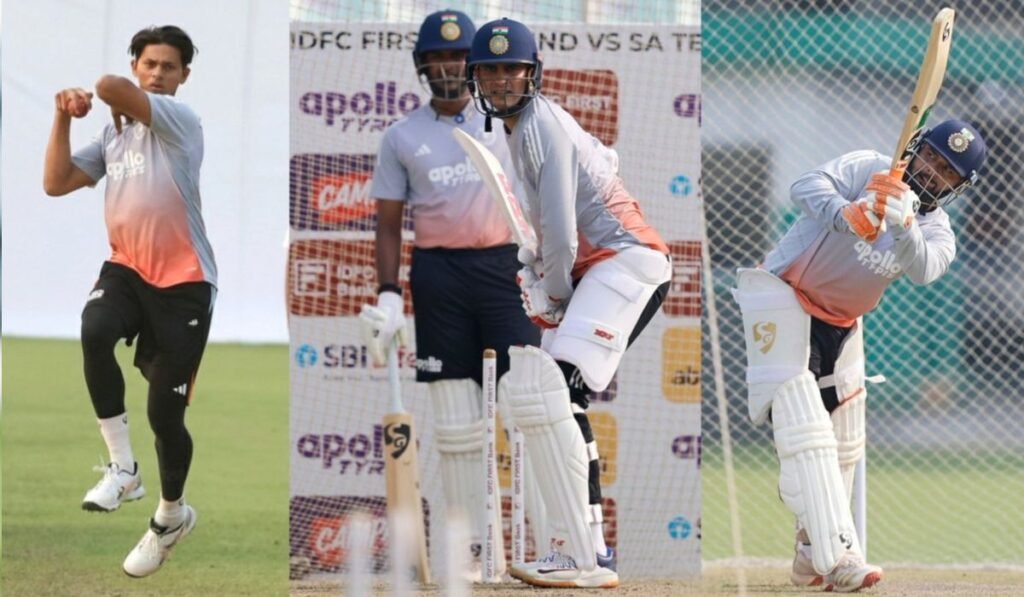
Ahead of the first test against South Africa at the Eden Gardens, starting from Friday, India skipper Shubman Gill was asked in the media conference on Thursday at the Eden Gardens that how he is being able to manage the character of the game’s different formats while switching from the ‘white-ball’ cricket to the ‘red-ball’ Test cricket. “I think in 4-5 days of turnaround, coming from another country and playing different formats is not easy. It’s more mental than showing physical ability. “I am still trying to figure out how to manage it. I think the workload, starting from the Asia Cup, we have been playing kind of back-to-back, travelling to different countries, switching between formats within 4 to 5 days. So, I am also trying to figure out what gives me the best chance to be able to perform and succeed in all those formats that I am going to play. But the challenge is definitely more mental than physical. Bodily, I feel fine. There’s obviously a little bit of jet lag when you are coming from Australia. Apart from that, physically, I feel completely fine. It’s a bit challenging at times because the requirements for different formats in different places of the world are different, so I think it’s a good challenge and a good learning curve for me, Gill explained in the media conference. Additionally, returning from Australia to India, and the adjustment to the climate is not as easy as the captain added, “There’s a good amount of time difference between India and Australia. So, the body takes a bit of time to get used to it. Then, after coming here, there’s a different challenge of playing Test cricket in India as compared to playing white-ball cricket in Australia. Definitely, it’s a bit challenging mentally and physically. But as a professional cricketer, it’s about how you tackle these things.” The 26-year-old has been playing and juggling the three formats on a consistent basis. Gill played the England series from June to August. He was then announced as deputy for T20I skipper Suryakumar Yadav for the Asia Cup in the UAE, which went on from September 9-28. There was little rest for the weary skipper, however, with Gill then coming back to India to lead in the 2-match West Indies series, which went on from October 2-October 14. After the Windies series, Gill had to fly in for a white-ball tour to Australia, consisting of 3 ODIs and 5 T20Is, which started on October 19 and ended on November 8. That makes it 6 months on the road where Gill has played 7 Tests, 12 T20Is, and 3 50-over matches. With the South Africa series starting on November 14 and its associated preparations, that doesn’t afford Gill much of a turnaround time. However, he also did not hesitate to reveal that playing at the Eden Gardens has always been homely for him. Eden Gardens was the ground that shaped his formative years when he burst onto the scene for the Kolkata Knight Riders in the IPL in 2018 after a successful U-19 World Cup campaign in the same year. It’s, however, ironic that since becoming captain of the India Test and ODI teams, Gill’s concept of ‘home’ has been basically living out of a suitcase.
India to face stiff challenge from Japan, Australia, and Chinese Taipei in the AFC Under-20 group stage

India will be facing stiff challenges in the group stage of the AFC Under-20 Women’s football championship main draw from Japan, Australia, and Chinese Taipei. The final draw ceremony took place in Bangkok, Thailand, on Monday. India is one of the 11 teams (eight group winners and three best-ranked runners-up) to make the cut for the tournament, joining host Thailand. The Joakim Alexanderrson-led side qualified for the tournament after topping its group ahead of Indonesia, Myanmar, and Turkmenistan in the qualifiers held in August. India will face a tough challenge from Japan, the last edition’s runner-up, and also a record six-time champion. It also won the FIFA U-20 Women’s World Cup in 2018 and was runner-up in 2024. Meanwhile, Australia finished in third place in the 2024 edition of the U-20 Women’s Asian Cup, while Chinese Taipei was knocked out in the group stage. The competition is set to take place from 1st to 18th April next year.
A Master’s Degree holder in psychology wins the challenge with ‘psychological strength’!

Pratika Rawal is a master’s Degree holder in psychology, and that reflected in her rock-solid innings of 122 against New Zealand along with Smriti Mandhana, guiding Indian women to ensure a berth in the semi-final of the ongoing women’s World Cup on Thursday. Amidst today’s fast-paced world, which hardly gives time and space to relax and often offers the grief of failure, psychologists quietly hold the power to resurrect mental well-being. For Pratika, however, she is her own therapist, her own guide—navigating the pressure cooker of international cricket with the calm precision of someone who understands the mind as well as the game. With over 75 per cent marks in her psychology degree, she has mastered theory—but it’s the practical application that shone brightest against the White Ferns. The start was not as seamless as her early career flares against the West Indies and Ireland. Momentum seemed elusive. Yet, as the game unfolded, Pratika showed composure and grit that have become her hallmark. She is not a product of the Women’s Premier League hype. Her journey has been forged on the hard grounds of domestic cricket with Delhi, tournaments that rarely command the attention or fanfare that the Ranji Trophy or Vijay Hazare Trophy do in the men’s game. Even when she played match-winning knocks, the recognition she deserved was often elusive. Like many greats, Pratika didn’t burst onto the scene as a teenage prodigy. It’s only in her mid-20s that she truly began to rise, quietly but steadily. Anjum Chopra, the first Indian woman to score a century in ODIs, praised her for her unwavering focus, her ability to stick to her game, and her determination to navigate challenging conditions with poise. In Pratika, perseverance isn’t just a trait—it’s a way of life. While speaking to Star Sports, Chopra explained, “For me, Pratika Rawal’s evolution is remarkable. Coming from domestic cricket without WPL experience, she stepped into the international team and made an immediate impact against Ireland and West Indies.” She continued, “Even when conditions were challenging in Bangladesh or Sri Lanka, she hung in there. She continued that form in the first two World Cup matches as well. The effort she’s put in under pressure and expectation is, to me, more significant than just reaching 1000 runs in 23 innings. Yes, that milestone is important, but the effort, especially playing her first World Cup, is top-notch,” Chopra added. Pratika Rawal’s childhood coach, Shravan Kumar, who has also coached Ishant Sharma and Harshit Rana, praised the youngster for her performance as well. Speaking to IANS, Kumar commended Rawal’s consistent outings with the bat, saying, “She has been playing consistently. Many had been critical of her for her scoring rate, saying her strike rate was low, even the coach. But more than strike rate, the consistency with which she has scored matters more. And her strike rate isn’t even that low.”
Virat Kohli’s swansong at Adelaide ends with a duck again, waves goodbye to fans
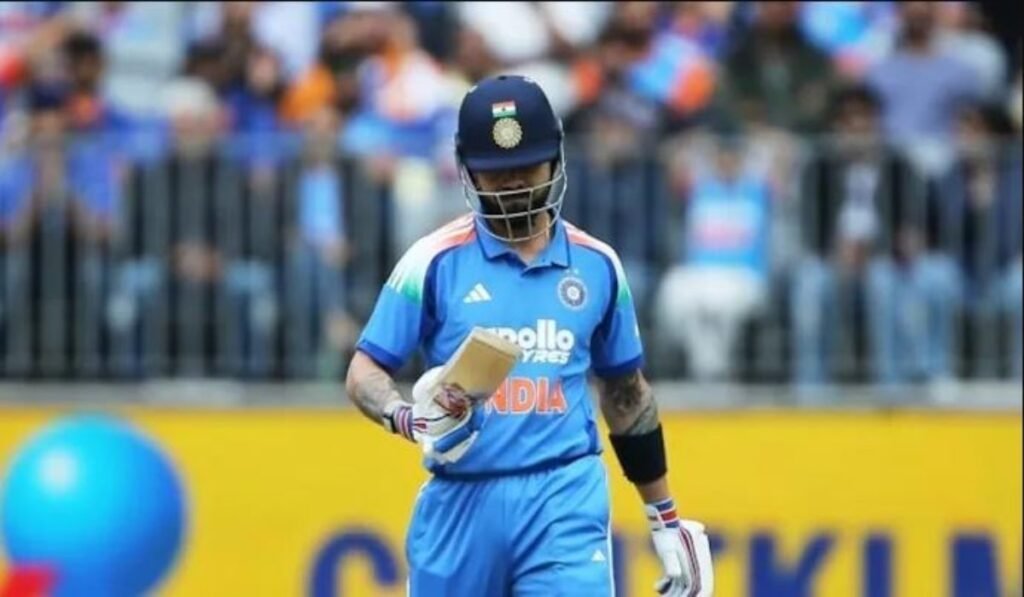
It was not expected. Virat Kohli is the former Indian captain and the highest scorer at Adelaide Oval as a visiting batsman. His much-awaited swansong ended in disappointment on Thursday in the ongoing second One Day International (ODI) at Adelaide. He returned to the pavilion, dismissed for another duck after he had bagged his first ODI duck at Perth. Kohli was trapped LBW after failing to cover the line of an in-swinging delivery from medium pacer Xavier Bartlett. Kohli appeared distraught after being given out by the on-field umpire. He walked back after facing just four deliveries in the second ODI at one of his favorite hunting grounds. Australia struck twice in the seventh over, removing captain Shubman Gill and Kohli after a cautious start from India, who were sent in to bat. In a poignant moment, Kohli acknowledged the Adelaide crowd with a wave as he walked back to the pavilion. The fans responded with a standing ovation, aware that it might have been his final outing at the iconic venue. Kohli ends his career at Adelaide Oval with 976 runs — the most by a visiting batter at the ground. However, Rohit Sharma who was also a failure in the team’s first ODI at Perth, looks surviving at Adelaide as he is unbeaten 44 off 68 deliveries so far, having shown patience as he has hit only three boundaries. With Shreyas Iyer accompanying him with 29 off 36 deliveries India are 84 for the loss of two wickets.
Rishabh returns against South Africa-A: Shami shown the door!
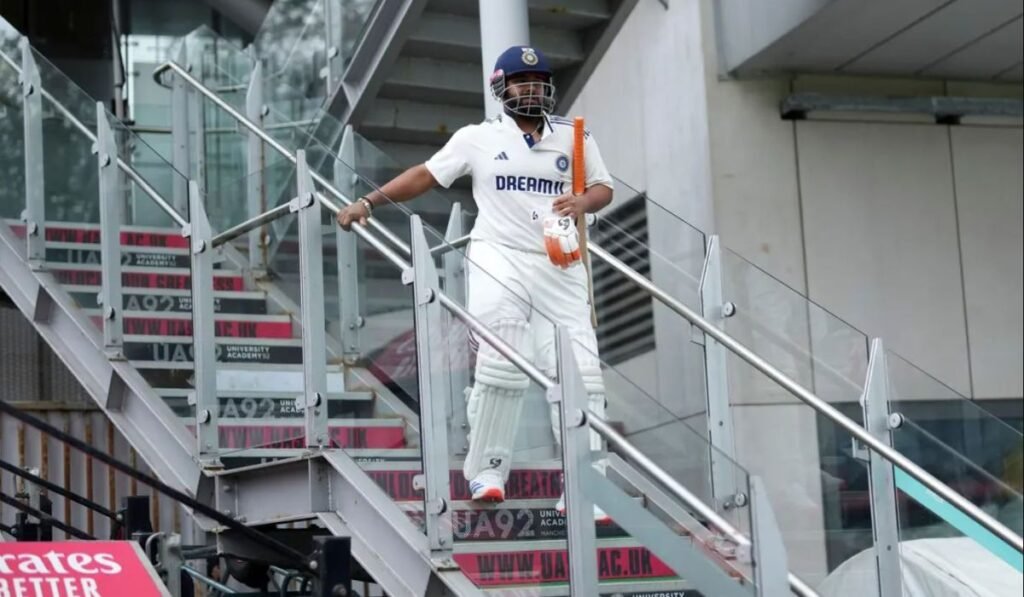
Rishabh Pant is returning to mainstream cricket after July. Before the series between India and South Africa, he was chosen as the captain of the India-A squad against South Africa-A for two four-day matches, scheduled to start on 30th October. So, India’s Test vice-captain will be missing the Ranji Trophy. The wicketkeeper-batsman was ruled out of the game for three months with a broken foot, which forced him to miss the Asia Cup, Test series against West Indies, and the Australia tour. South Africa Test and ODI captain Temba Bavuma will also feature in the 2nd four-day match ahead of the India-South Africa Test series. Bavuma missed out on the Pakistan tour as he was sidelined with an injury. India will also play three One-Day matches against South Africa-A, starting 13th November. Rohit Sharma and Virat Kohli’s participation in the matches has not yet been confirmed. The BCCI has not yet announced the squad for those three One-Day matches yet. The 1st four-day match will have young players from India’s Test squad, including Sai Sudharsan and Devdutt Padikkal. It is also an opportunity for Rajat Patidar to impress as he is eying a Test comeback on the back of scintillating red-ball form. However, one surprising omission is of Sarfaraz Khan, who continues to be absent since the Border-Gavaskar Trophy earlier this year. While Rishabh Pant will continue to lead the squad in the 2nd match, he will have India’s Test regulars. KL Rahul, Prasidh Krishna and Mohammed Siraj, who are not in India’s T20I squad for the Australia tour, will play the 2nd match against South Africa A. Significantly, Mohammed Shami continues to be neglected by the BCCI selection committee. It seems that the selectors are not willing to bring him back to at least Test cricket. Despite proving fitness, and having shown his class in Bengal’s Ranji Trophy opening match against Uttarakhand, Mohammed Shami has not found a place in the India-A squad for South Africa-A series. He picked up 7 wickets for Bengal against Uttarakhand. Shami recently made headlines when he countered BCCI chairman of selectors, Ajit Agarkar’s, claims about his fitness. Agarkar said he was not fit ahead of Asia Cup. He was also not considered for the ODIs against Australia. However, his absence in the India-A series raises the question of whether selectors have planned to show him the door permanently!
Adelaide Curator uses heat lamps to dry pitch before second ODI
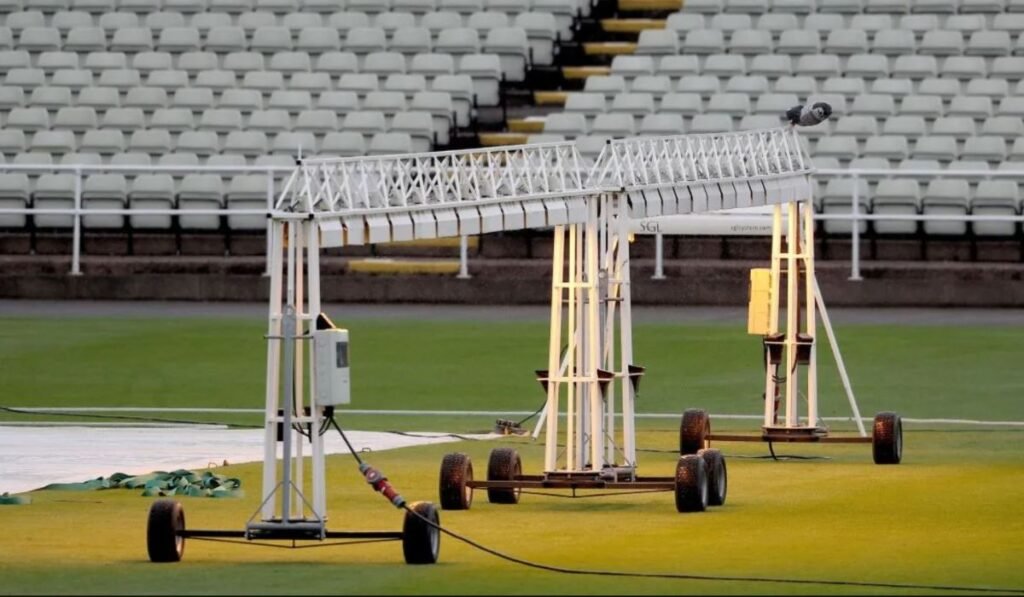
The rain played spoilsport in India’s first One Day International (ODI) at Perth. The match was finally completed in 26 overs each due to continuous rain throughout India’s innings. So, in a bid to protect the pitch from the interruption of rain at Adelaide Oval for the 2nd ODI, the curator has been using Heat Lamp 48 hours before the match on Thursday to dry the pitch. According to reports from Australian media, the pitch curator in Adelaide deployed heat lamps on the centre wicket to dry them as there is a 99% chance of rain through Tuesday night. In the subcontinent, many have witnessed hairdryers, wood-fire, pedestal fans and even helicopter to dry pitches. But in Australia and England, the stadium authorities deploy modern measures. Heat lamps are nothing but high wattage bulbs that generate more heat than traditional light-bulbs and LED lights. These lamps emit infrared radiation to generate heat, which is directed towards the wet patches on the pitch. As a result, it evaporates the moisture on the soil and grass. Heat lamps are used in various purposes, including bathrooms and animal farms, to help speed up the drying process. Pitch curators across the world also turn to an array of heat lamps to quickly dry outfields and pitches. The best pitch of the lot is traditionally expected at the Adelaide Oval. The pitch generally offers a flat surface with even bounce. However, for the 2nd ODI, it could be a little different. With a lot of rainfall predicted on Monday and Tuesday, the pitch will remain under covers. Although, the forecast for Thursday is great with lot of sunlight, the fact that the pitch would remain under cover for at least 48 hours before the match day, there will be moisture. Australia’s fast bowlers, such as Mitchell Starc, Josh Hazlewood, and Nathan Ellis, could benefit if India bat first because moisture in the pitch may create seam movement, making batting challenging early on. As heat lamps continue to dry the surface during the day and sunlight increases, the pitch is expected to lose moisture, making conditions easier for batters later in the match. With India down 0-1 in the three-match series, it’s a do-or-die for India to restore parity. India have not won an ODI series in Australia since 2019.
Sunil’s return was a mistake; Gurpreet should also retire for the new generation: Bhaichung
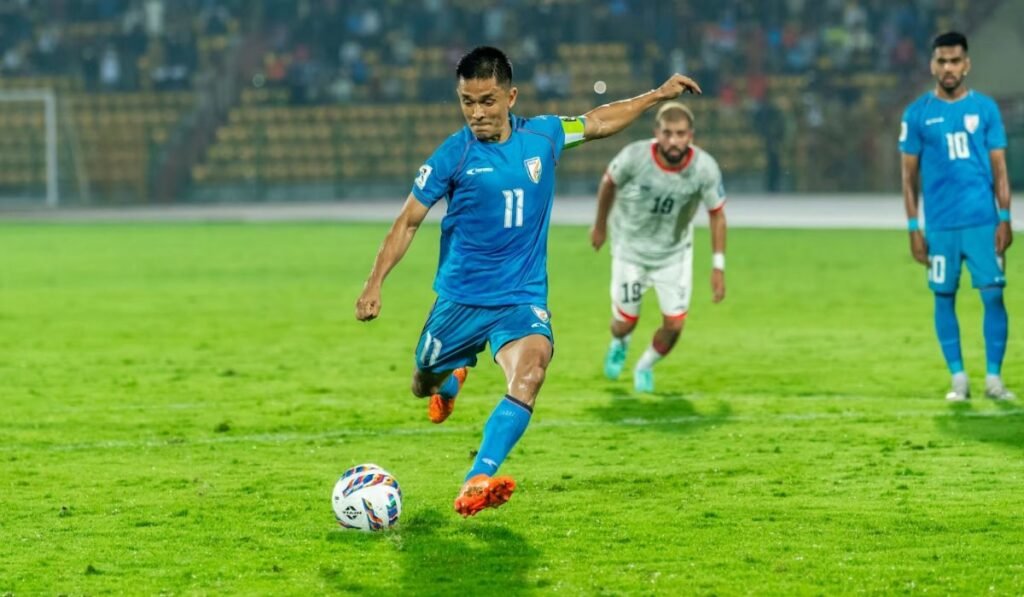
Former India captain Bhaichung Bhutia has said that talismanic striker Sunil Chhetri should not have returned to international football, breaking his retirement to help India in the AFC 2027 Asian Cup qualification campaign. Bhaichung termed it a mistake. Chhetri last scored for the Blue Tigers in March this year against the Maldives but has drawn a blank in the country’s next matches since then. While reacting to India’s exit from the Asian Cup qualifiers after a 1-2 defeat to Singapore in the third round in Goa, the former Indian captain urged goalkeeper Gurpreet Singh Sandhu to consider stepping aside to give the next generation a chance, also. “It’s time for Sunil. He’s had a great career and a wonderful farewell, but his comeback was a big mistake, for him and for Indian football. I had mentioned that earlier, too. It’s also time for senior players like Sunil and Gurpreet to say goodbye. They have served Indian football well, but now the next generation has to take over,” Bhutia told PTI. Bhutia urged India to move away from glamorous European football models and instead emulate Asian nations such as Uzbekistan and Jordan, which have achieved consistent success with modest resources. India’s 1-2 defeat against Singapore came after a 1-1 draw in the away leg, resulting in the Blue Tigers missing out on the continental tournament for the first time since it expanded to 24 teams in 2019. “It’s very disappointing because the Asia Cup is something we should at least be qualifying for regularly. When 24 teams qualify for the Asia Cup and you still can’t make it, then it’s very, very disappointing. “We keep talking about the World Cup and other big things, but if we can’t even qualify for the Asia Cup, then we are very far away from our goal,” the 48-year-old Indian football icon added.