
Supreme Court conveys the Union government’s promise to support the AIFF for the ISL
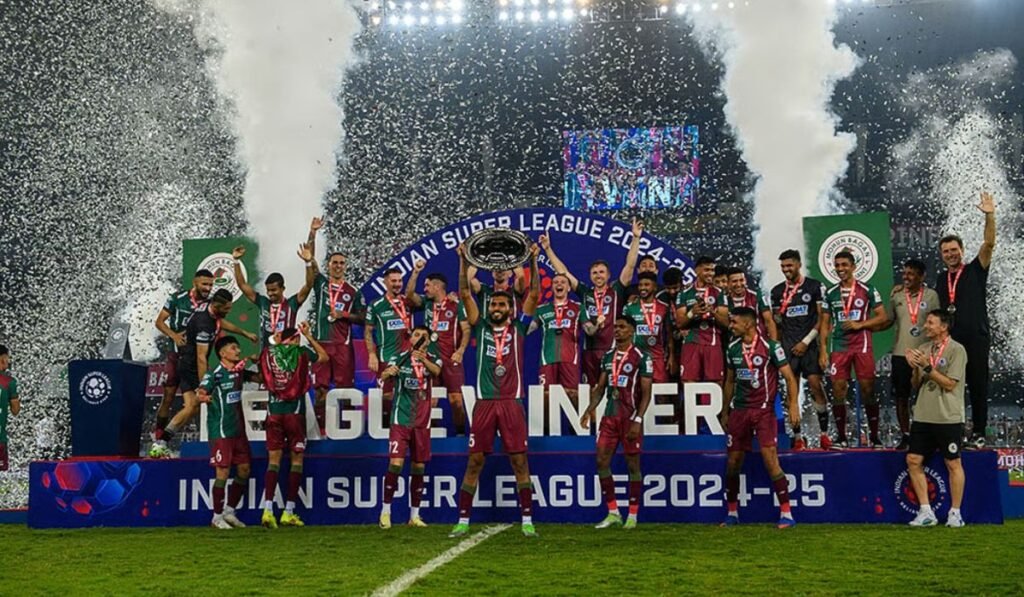
The Union government has finally come forward, extending cooperation to the All Indian Football Federation (AIFF) by taking responsibility to solve the ongoing stalemate in the Indian Super League (ISL). Solicitor General Tushar Mehta informed the apex court on Friday that the government has taken stock of the crisis that the AIFF faces after a failed tender process for monetization of the country’s premier league. He assured a special bench of Justices PS Narasimha and J Bagchi that the government is committed to providing relief to the players and clubs and would find a way for the tournament to be held. Mehta said that the concerned minister is “fully aware” of the situation and has clarified that the “ISL must be held. How it is to be held, what sponsors, who will finance, etc, can be left to the government. The government would intervene to ensure that the ISL is held and our players are not put to any disadvantage,” he said during the hearing. “We will ensure that players are not put at any disadvantage due to a lack of sponsors or a lack of club owners. The government’s role, though, shouldn’t be too overbearing to give the impression of interference, the bench pointed out. “We don’t want to put the impression that the government is again interfering. It is only to tide over the situation,” the justices said. “Absolutely, otherwise, we have no role,” Mehta agreed, adding the government will bear in mind that “anything being done should be in conformity with FIFA regulation so that we may not fall foul of that”. Twelve ISL clubs had appealed to the Supreme Court for a speedy resolution, while Sports Minister Mansukh Mandaviya had met representatives of I-League clubs on 13th November in New Delhi and was apprised of concerns over the football season. Amicus Curiae Gopal Sankaranarayanan advised the Centre to engage with clubs while also recommending a dialogue with the four potential bidders, who had attended pre-bid meetings. The Court agreed on Mehta’s request for time to come up with a solution and said it would again hear the matter after two weeks, keeping in mind AIFF’s current 15-year commercial partnership with Reliance-subsidiary FSDL ends on 8th December. The AIFF, having pledged to submit an affidavit to the Court, has called for a special general meeting to vote on the disputed co-existing membership on 24th November.
Supreme Court clarification against AIFF appeal for review: Article 23.3 not be adopted now

The Supreme Court has issued a significant clarification on the long-debated AIFF Constitution, clearing confusion over article 23.3 and articles 25.3(c) and 25.3(d). The latest order says Article 23.3 does not need to be adopted. Articles 25.3(c) and 25.3(d) will be formally adopted. However, these will take effect only after the elections next year, once the current executive committee’s term ends in 2026. This clarification comes shortly after the All India Football Federation (AIFF) formally adopted its new constitution on 12th October, during a special general body meeting held in New Delhi. The adoption marked the end of a long and complicated legal journey that had delayed structural reforms in Indian football for years. Article 23.3 had sparked major concerns within the federation and from FIFA, as it required AIFF to seek the Supreme Court’s approval for any constitutional amendments. The Supreme Court acknowledged this concern and made it clear that continuous judicial supervision of a sports body is not appropriate. The bench, led by Justices P.S. Narasimha and Joymalya Bagchi, noted that the AIFF will instead be governed by the National Sports Governance Act, 2025, and any subordinate regulations that may be formed under it. The court also addressed the debate around Articles 25.3(c) and 25.3(d), which bar AIFF officials from holding simultaneous positions in state associations. While the provisions were found to be consistent with both Indian law and FIFA regulations, enforcing them immediately would have forced several current office-holders. According to Article 25.3 (c and d), an office bearer in AIFF’s executive committee can’t hold a position as an office bearer in a member association, which was viewed as adverse to the FIFA charter. The two-member SC bench observed that “they are not in conflict with any laws, regulations, or even FIFA Charter. The apprehensions about the unavailability of experienced personnel to man AIFF and other member associations if these Articles are incorporated are speculative. “No credible data is placed before us to sustain such apprehension. We are, therefore, of the opinion that these Articles shall be retained. “We may also clarify that the said Articles, like many others, would be subject to the National Sports Governance Act, 2025, and the subordinate legislation that may be framed thereunder.” But since the immediate consequence of the adoption of this clause would have led to “practical problem” of the majority of the federation’s office bearers, needing to resign from their posts, the Court said that Articles 25.3(c) and (d) need not be applied to the present office bearers as their term is expiring in September 2026. The AIFF has given an undertaking promising to formally adopt Articles 25.3 (c and d), “but it may be given effect to after the term of the present executive expires in September 2026”. “In our judgment, we permitted the present executive to continue till the end of its term in order to ensure that there is minimal disruption to the already delayed sporting events,” the Court said. “In the same line, and to subserve the same purpose, we direct AIFF to adopt Articles 25.3(c) and (d) within three weeks from today, as undertaken by Mr. Siddharth Luthra, Senior Counsel on behalf of AIFF. Articles 25.3(c) and 25.3(d) will, however, come into effect after the present executive demits office.”
Supreme Court rules out ‘fresh election’: Orders AIFF to make a ‘draft of new constitution’ within four weeks

The Supreme Court, at its scheduled hearing on Friday morning, has directed the All India Football Federation (AIFF) to finalize and adopt the ‘draft constitution’, convening a general body meeting within four weeks. The court ruled out the need for immediate fresh elections, allowing the current executive committee to complete its term until the polls scheduled for 2026. The court also emphasized that the Indian Super League (ISL) should be continued, but through a transparent process of the selection of a commercial partner for the league to make the ultimate solution about the Master Rights Agreement (MRA) for the ISL. This ruling aims to resolve the longstanding governance issues within the AIFF and avert a potential suspension by FIFA, which had set an October 30 deadline for the ratification of the new constitution. The suspension would have a crucial impact on the Indian national team’s participation in the forthcoming international tournaments. The Supreme Court’s judgment also reflects its effort to align the AIFF’s governance with the new National Sports Development Code 2011 and the recently enacted National Sports Governance Act 2025.
Supreme Court paves way for ISL 2025-26 to kick off in December; directs AIFF to stick to the calendar

The Supreme Court on Monday directed the All India Football Federation (AIFF) to ensure that the 2025–26 football season commences on time with the Super Cup and other domestic competitions under its control. A Bench of Justices PS Narsima and Joymalya Bagchi also directed the AIFF to conduct an open, competitive, and transparent tender process for selecting a commercial partner to run the Indian Super League (ISL). The Court passed the order after AIFF and its long-term commercial partner, Football Sports Development Limited (FSDL), presented a joint resolution for the upcoming season. The two entities faced uncertainty due to an earlier embargo from the Court, which prevented AIFF from entering fresh binding contracts until its new constitution was finalised. As a result, the ISL, India’s top-tier league, lacked clarity on its future. The Court was informed that both sides agreed the 2025–26 season would begin with the Super Cup, a domestic tournament controlled by AIFF. This measure was intended to keep players and clubs active while the ISL process continued. The ISL rights themselves will now be put out to tender by October 15, 2025, in line with FIFA and AFC regulations, the National Sports Code, and the new National Sports Governance Act, 2025. The Bench recorded that FSDL had waived its contractual rights under the existing master rights agreement, including first negotiation and matching rights, and had issued a no-objection certificate allowing AIFF to bring in a new partner. FSDL also confirmed it had cleared its financial dues and would advance payments if needed to support AIFF in running the season. Explaining why these directions were necessary, the Court said, “We direct AIFF to take such measures as may be necessary for the timely commencement of the football calendar and to maintain competitive continuity for the 2025–2026 season with respect to Super Cup and other competitions under its control.” On the transparency required for ISL rights, the Court highlighted its expectation of global best practices. “The AIFF shall also issue necessary tenders inviting bids for an open, competitive, and transparent process for selection of its commercial partner to conduct the Indian Super League,”the order stated. The Bench noted the assurances from both AIFF and FSDL and acknowledged the rare cooperation between the two as a milestone for Indian football. “We have no hesitation in recording that their collaborative effort is a significant step in the evolution of Indian football. This shared commitment will go a long way in institutionalizing domestic, national, and international events.”
Supreme Court asks AIFF and FSDL to decide on conducting ISL within five days; Verdicts expected on 28th August.
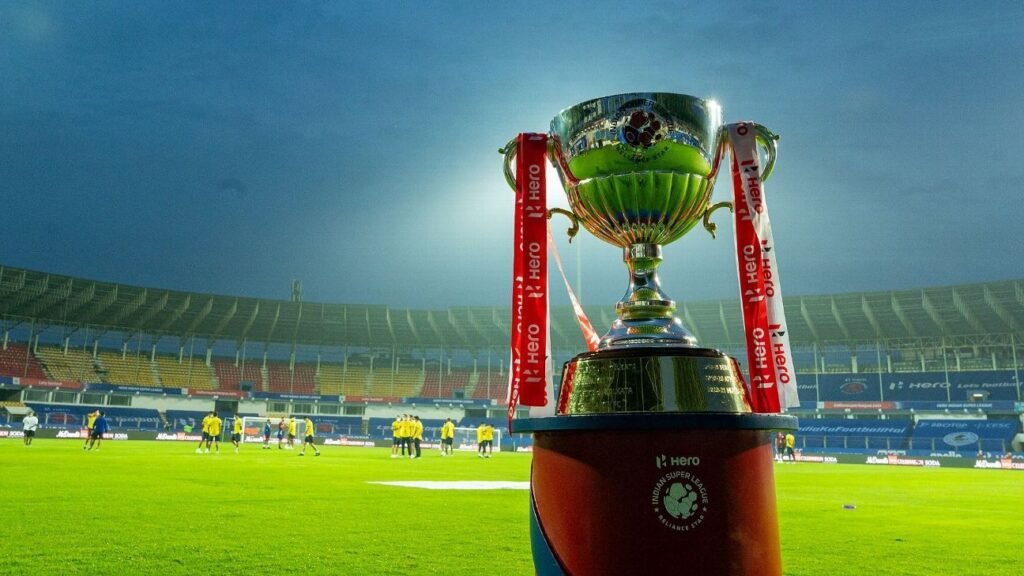
Indian football fans remain uncertain about the future of the Indian Super League (ISL). The Supreme Court, during a scheduled hearing on Friday, instructed the All India Football Federation (AIFF) and league organizer, Football Sports Development Limited (FSDL), to meet and decide how to proceed with the league this year. Supreme Court has asked both the major stakeholders to submit their proposal on the matter in the next hearing scheduled on 28th August. The expiry of the 15-year MRA between AIFF and FSDL on 8th December has been the biggest impediment to getting the 2025-26 ISL season started. While marketing partners FSDL want to extend the contract and a guarantee from the AIFF, the national body has cited the impending SC judgment on its new constitution as the reason behind not signing an extension. In the AIFF Constitution case, the SC bench of Justice Sri Narasimha and Justice Joymalya Bagchi said that the judgment in the matter is ready, but they want to review the new National Sports Governance Bill before delivering a final verdict. All in all, the positive developments in the Supreme Court hint that if everything goes well, the issues related to ISL may get sorted soon, and the league could start in the next few months. Earlier on Thursday, the eleven Indian Super League clubs on Thursday urged the Amici curiae Gopal Sankaranarayanan and Samar Bansal to mention the ongoing crisis in front of the SC as they face an “existential crisis.”
AIFF takes U-turn on keeping ISL clubs’ promise; says Supreme Court move guided by legal advice
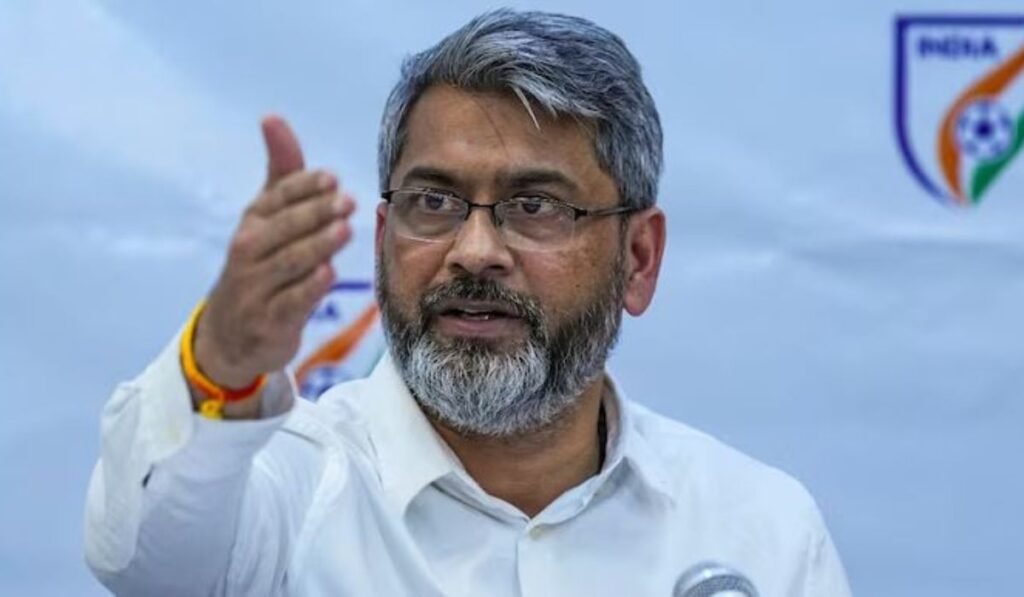
Facing criticism for its sudden U-turn, the All India Football Federation (AIFF) issued a defense of its handling of the Indian Super League (ISL) crisis on Monday. The governing body stated that its actions were based on legal advice, which suggested that the Supreme Court be addressed first on the National Sports Governance Bill before shifting attention to the ISL dispute. Earlier, the AIFF declared it would press the ISL matter before the Supreme Court at 10:30 am on Monday. By evening, that assurance was retracted, leaving stakeholders baffled. Clarity only returned when Amicus Curiae Gopal Sankaranarayanan, supported by Samar Bansal, confirmed the ISL issue would indeed reach the court’s attention. “Based on advice received that the National Sports Governance Bill 2025 had passed both the houses of Parliament, the AIFF’s Senior Counsel advised during a briefing meeting on Sunday late evening that this is the first aspect that needs to be brought to the attention of the Hon’ble Supreme Court,” the federation said in its statement. That clarification was followed by another—AIFF claimed it was still weighing when to officially raise the ISL matter, but the Amicus Curiae had already moved ahead. By Monday, the case was mentioned before the bench. In its statement, AIFF stressed the broader stakes of the dispute. “The AIFF intends to use this opportunity to represent to the Hon’ble Supreme Court the urgent need for commercial continuity and to determine the future structure of its top-tier league, in the interests of players, clubs and other parties, all of whose livelihoods are at stake due to the current impasse,” it read. At the root of the chaos is the non-renewal of the Master’s Rights Agreement (MRA) between ISL organizers, Football Sports Development Limited (FSDL), and the federation. With the 2025-26 ISL season “put on hold” since July 11, there’s no calendar, no fixtures, and no guarantee of when—or if—the season kicks off. The standoff has already hit home. Eleven clubs have jointly warned that without clarity, they “face the real possibility of shutting down entirely.” Some have halted first-team operations, others have frozen salaries, and hundreds of Indian and foreign players are staring at uncertain futures.
ISL clubs blame AIFF for not highlighting the Supreme Court about the ‘depth of crisis’
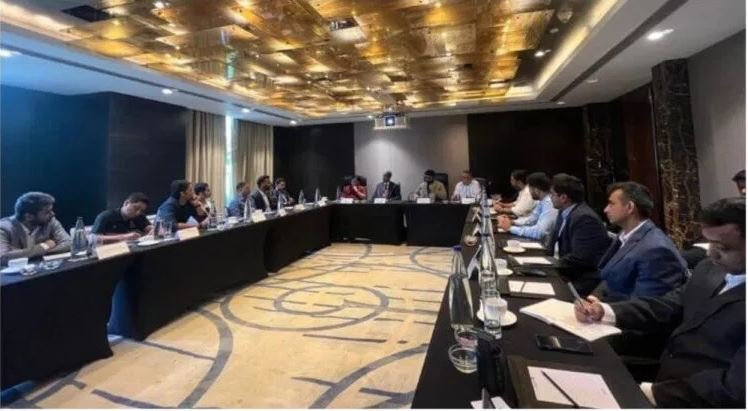
Indian Super League (ISL) clubs have pointed out four immediate and severe consequences that have surfaced due to the ongoing uncertainty while formally requesting the All Indian Football Federation (AIFF) to approach the Supreme Court immediately. At a virtual legal counsel meeting on Friday, it was reported that it was agreed that the AIFF would verbally mention to the Court on Monday (18th August), raising the hardships faced by stakeholders of the ecosystem. The clubs said that the progress they have made over the past 11 years to build youth development systems and training infrastructure is now in ‘imminent danger of collapse’. Multiple clubs have suspended operations and terminated contracts of players and staff. The FIFPRO has simultaneously termed the clubs’ recent decision to stop salaries and terminate contracts unfair and also urged FIFA to look into it. The situation is so grave that the clubs said a risk has emerged where they clubs may be forced to shut down. Its impact on national team readiness, regulatory and international sanctions, and erosion of stakeholders’ confidence will be naturally worse. “More than two thousand direct livelihoods — players, coaches, medical staff, analysts, kit managers, groundsmen, administrative staff— hang in the balance, alongside countless indirect livelihoods dependent on the league,” they said. “This is a huge financial blow that clubs will not recover from this year, and it will affect the payout of salaries to players and staff in the immediate future, besides making several stakeholders contemplate a complete and permanent shutdown of their respective clubs.” At a meeting on 7th August, the AIFF had proposed to stage the Super Cup in September during the time the Supreme Court delivers a verdict on the matter, but the clubs remained unconvinced about it without clarity on the status of the start date of the ISL, which usually takes place in a September-April window. “Footballers depend almost entirely on regular club training and matches to maintain match fitness and tactical sharpness. Without a functioning league, our national team will be severely disadvantaged in upcoming AFC and FIFA tournaments,” it was pointed out. The AIFF was reminded that the Asian Football Confederation (AFC) mandates a minimum number of competitive matches (24) for participation in continental competitions. “Without the ISL, this requirement cannot be met, putting India at risk of suspension from all AFC and FIFA tournaments. FIFPRO, the global players’ union, has already apprised FIFA of the situation, increasing the likelihood of external scrutiny and possible sanctions,” the clubs said.
Eleven ISL clubs want to approach the Supreme Court independently to know about the League impasse!
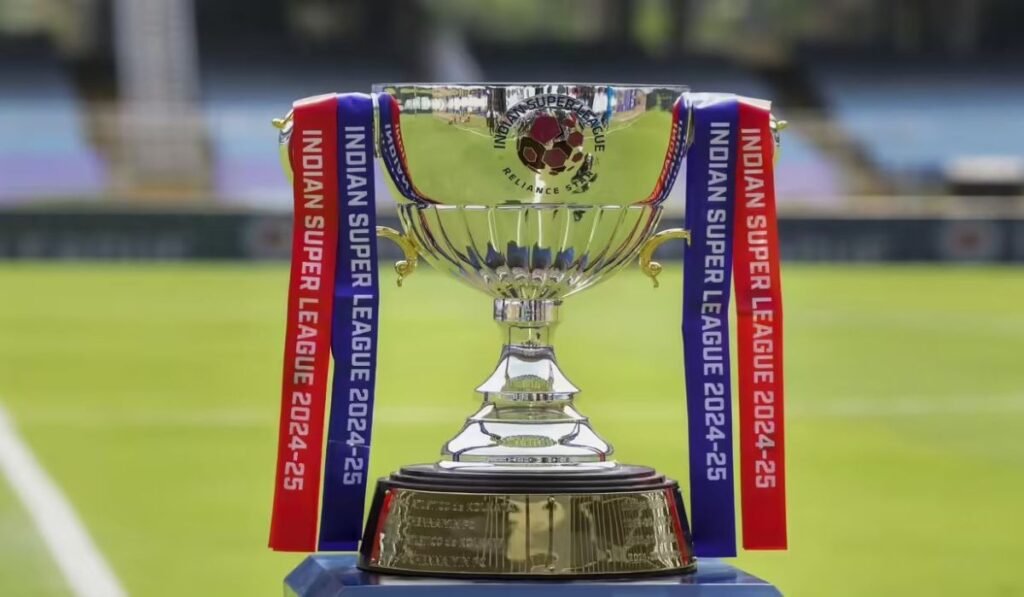
Eleven out of 13 Indian Super League clubs have urged the All India Football Federation (AIFF) to bring the “current situation” surrounding the stricken league to the attention of the Supreme Court. The clubs have stated that if the federation fails to do so, they will have “no option but to seek judicial recourse independently.” The letter has been sent to the federation just a day after it met representatives of 13 ISL clubs and of the Football Sports Development Limited (FSDL) in New Delhi. The upcoming season of the ISL is currently suspended due to the non-renewal of the Master Rights Agreement between the AIFF and the FSDL, which is set to expire in December 2025. Negotiations have been stalled due to an oral directive from the Supreme Court that no major decision be taken by the federation until its final orders have been passed on a case pertaining to the AIFF’s constitution. “Based on legal advice, the ISL clubs are preparing to independently approach the Hon’ble Supreme Court of India for relief,” said the clubs in the letter sent on Friday. Mohun Bagan Super Giant and East Bengal are the only clubs whose signatures are missing in the letter. The clubs further said that they were “somewhat surprised” that the matter has not already been brought to the court’s attention, given its gravity and implications for the sport”. “We respectfully urge the AIFF, in its capacity as the statutory regulator of football in India and the principal party to the proceedings, to urgently bring the current situation to the attention of the Hon’ble Supreme Court of India,” the 11 ISL clubs said in a joint letter addressed to AIFF president Kalyan Chaubey. “This may be done by mentioning the matter for urgent listing and judgment and apprising the Hon’ble Court of the current situation to ensure that the ISL and associated competitions may proceed.” A domino effect of the uncertainty is already beginning to take shape. Chennaiyin FC and Odisha FC have suspended first-team operations, while Bengaluru FC have suspended salaries for those part of the first team setup – the coaching staff and the players, among whom is India’s record goal-scorer Sunil Chhetri.
AIFF promises continuity of ISL despite the uncertainty over MRA renewal
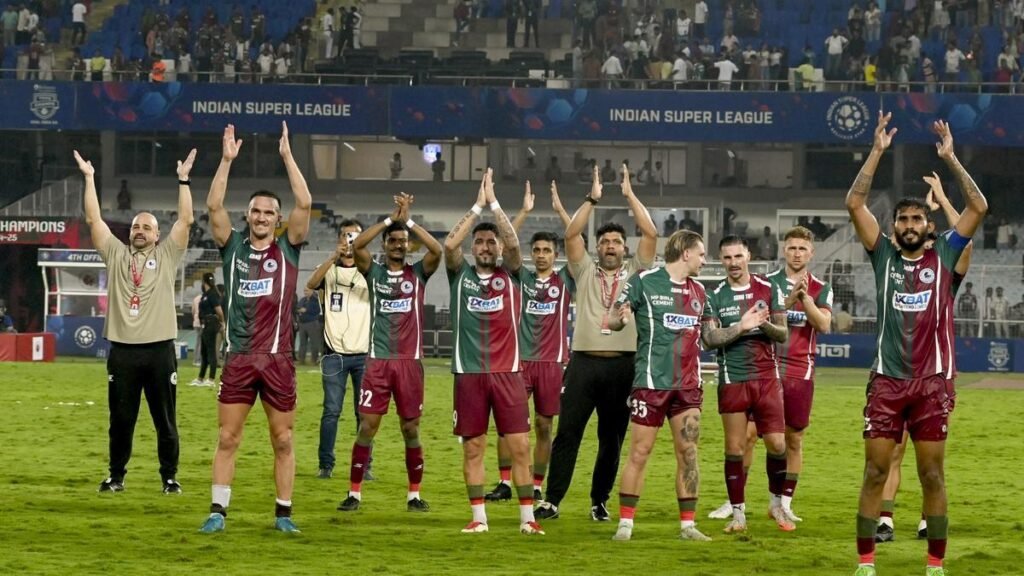
The All India Football Federation (AIFF) on Saturday said it would take all necessary steps to ensure the continuity of the Indian Super League (ISL), a day after the organizer of the League announced that the 2025–26 season had been placed “on hold” due to unresolved contractual issues. In its first public statement since Football Sports Development Limited (FSDL) informed clubs of its decision to suspend planning for the upcoming season, the AIFF urged stakeholders to remain patient while talks over the Master Rights Agreement (MRA) continue. “The AIFF and its stakeholders will take all possible steps and do all things within their power to ensure continuity of the ISL in the best interests of Indian football,” the federation said in a brief statement. “We request the understanding of all stakeholders in the interim.” The MRA between FSDL and AIFF — which underpins the structure, operations, and commercial framework of the ISL — is set to expire on December 8, 2025. The league, typically played between September and April, would be underway by then, with teams and broadcasters requiring long-term clarity to plan logistics and commercial activations. Citing this lack of contractual certainty, FSDL earlier this week conveyed to ISL clubs that it was “not in a position to proceed with the 2025–26 ISL season” and would “place it on hold until further clarity emerges.” The situation has triggered concern across the Indian football ecosystem, especially with the ISL being the country’s top-tier league and a crucial platform for clubs, players, and sponsors. During a Supreme Court hearing on April 26, 2025, the AIFF was advised by its legal counsel that the court had made an observation that the MRA should not be renewed until further orders. As a result, the federation said, all discussions on the agreement’s extension have been kept in abeyance pending further directions from the Supreme Court of India.
ISL 2025-26 season formally on hold; FSDL informs clubs and AIFF
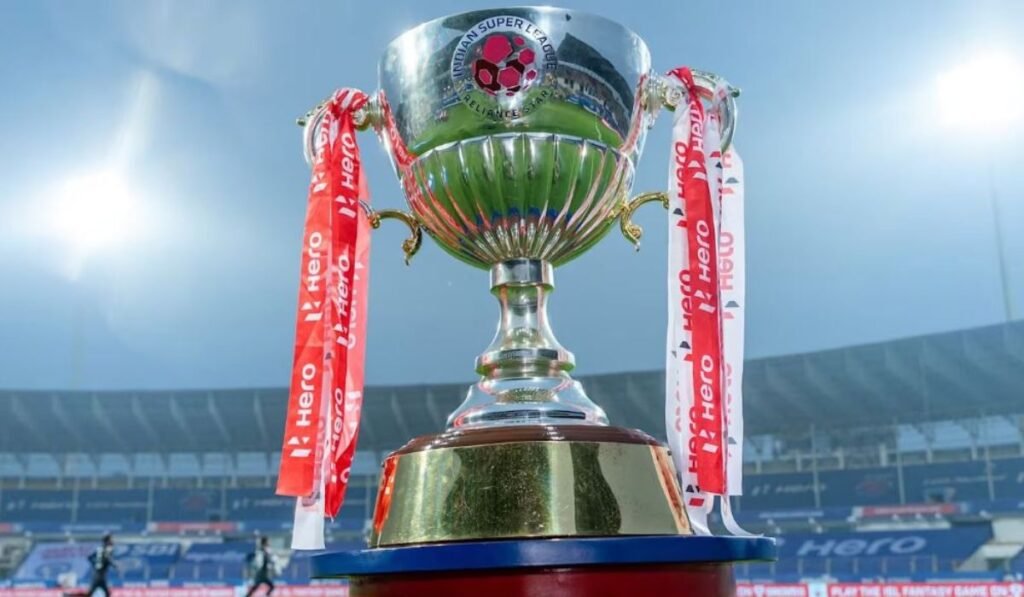
Uncertainty already loomed large over the staging of Indian Super League 2025-26. It happened formally on Friday as Football Sports Development Limited (FSDL), the owner ISL and commercial partner of the All India Football Federation (AIFF) sent an email to the ISL clubs stating that due to uncertainty over the renewal of MRA the ISL is being kept on hold. Following a directive from the Supreme Court of India, the All India Football Federation (AIFF) have been asked not to negotiate new terms of the Master Rights Agreement (MRA) with FSDL until a final judgment is delivered in the AIFF draft constitution case. Seven ISL clubs — FC Goa, Bengaluru FC, Chennaiyin FC, Odisha FC, Kerala Blasters, Mumbai City, and Hyderabad FC/FC Delhi — have postponed their pre-season preparations and withdrawn from the forthcoming Durand Cup. Their decision stems from concerns over potential financial losses if the ISL 2025–26 season fails to begin on schedule. The MRA, signed in 2010 for a 15-year term, is due to expire on 8th December 2025. The agreement includes a ₹50 crore annual guarantee from FSDL to the AIFF, a critical sum supporting the federation’s daily operations and football development initiatives. The Supreme Court’s directive has stalled any forward movement on renewing or restructuring this agreement until after the court’s summer recess, which ends on 14 July 2025. It is however believed that many clubs wanted to use force majeure to suspend or terminate contracts with the players and staff, which they could not do without official communication from AIFF or FSDL. The FSDL email to the clubs has stated, ‘As you are aware, the Master Rights Agreement (MRA) between FSDL and AIFF is scheduled to expire on 8th December 2025 – approximately one-third of the way through a typical ISL season, which runs from September to April. Renewable discussion remains inconclusive at this time. In the absence of a confirmed contractual framework beyond December, we find ourselves unable to effectively plan, organise, or commercialise the 2025-26 ISL season.” “Given this situation, we regret to inform you that we are currently not in a position to proceed with the 2025-26 ISL season and are placing it on hold until further clarity emerges on the contractual structure beyond the end of the current MRA term,” the email further added.