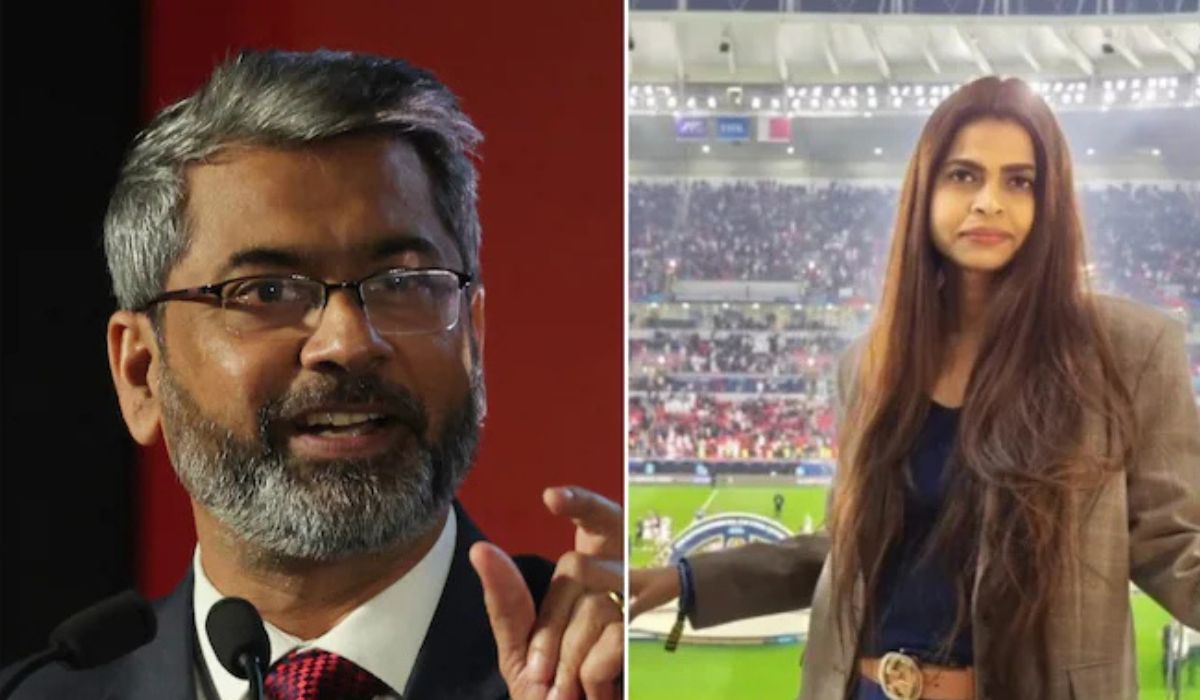
The All India Football Federation (AIFF) is facing renewed controversy after its president, Kalyan Chaubey, was accused of misconduct by Valanka Alemao, chairperson of the AIFF Women’s Committee. The allegations, formally submitted in a letter, have once again drawn attention to concerns around governance and internal functioning within Indian football.
The incident reportedly occurred during an Executive Committee meeting held at Football House in New Delhi on March 29. Alemao claimed she was “heckled and harassed” during the proceedings by senior officials. The accusations come shortly after she had raised serious concerns about administrative shortcomings during India’s Women’s Asian Cup campaign.
In her letter addressed to Executive Committee members, Alemao outlined her grievances in strong terms, “I wish to place on record the entirely disgusting behaviour of the AIFF President Mr Kalyan Chaubey, Vice President, Mr. N. A. Haris, and Deputy Secretary General M Satyanarayan. I feel deeply prejudiced, and I found that several attempts were made by the President to suppress my voice.”
She further alleged, “The President made remarks against me which were unnecessary and disrespectful. He, along with the DSG, raised his tone time and again beyond an acceptable decibel level with the intention of intimidating me. Throughout the course of the meeting, I was consistently targeted.”
Alemao is a prominent figure in Indian football administration. In addition to leading the AIFF Women’s Committee, she serves as the CEO of Churchill Brothers Football Club, Goa, and is the daughter of former Goa Chief Minister Churchill Alemao. She has also gained international recognition, becoming the first Indian woman to be appointed to FIFA’s Women’s Football Development Committee for the 2025–2029 term.
The tensions between Chaubey and Alemao appear to stem from broader disagreements over the administration of Indian football. In her role as women’s committee chief, Alemao had earlier written to Chaubey demanding accountability over what she described as a “series of blunders” during India’s Women’s Asian Cup campaign in Australia. Her concerns included issues related to team management, logistics, and decision-making processes.
She also highlighted what she saw as a lack of consultation with key bodies such as the Executive Committee and the Women’s Committee, raising questions about transparency within the federation.
Her latest allegations suggest that these disagreements have escalated, indicating a deeper breakdown in communication and decision-making at the top of the AIFF. The March 29 meeting appears to have brought these underlying tensions into the open.
The episode once again puts the spotlight on governance standards in Indian football, a sector that continues to grapple with administrative challenges even as the sport seeks to grow and professionalise.